
If what’s missing is leadership
Nobody owns the message, the campuses are drifting, the communications director is drowning. 30 minutes, and you’ll know where the system is leaking.
Book a strategy call with me
Fractional CMO for churches
A fractional CMO for churches is a part-time executive who owns the church’s communications and marketing strategy, aligns every campus and ministry around one message, and leads the staff and vendors who execute it. I’m Justin Brackett. I led digital at Lakewood Church (44M social followers, 1M emails a day) and across 14 campuses at Seacoast Church, and this is the role I now fill for churches that need the leadership before they can justify the hire.
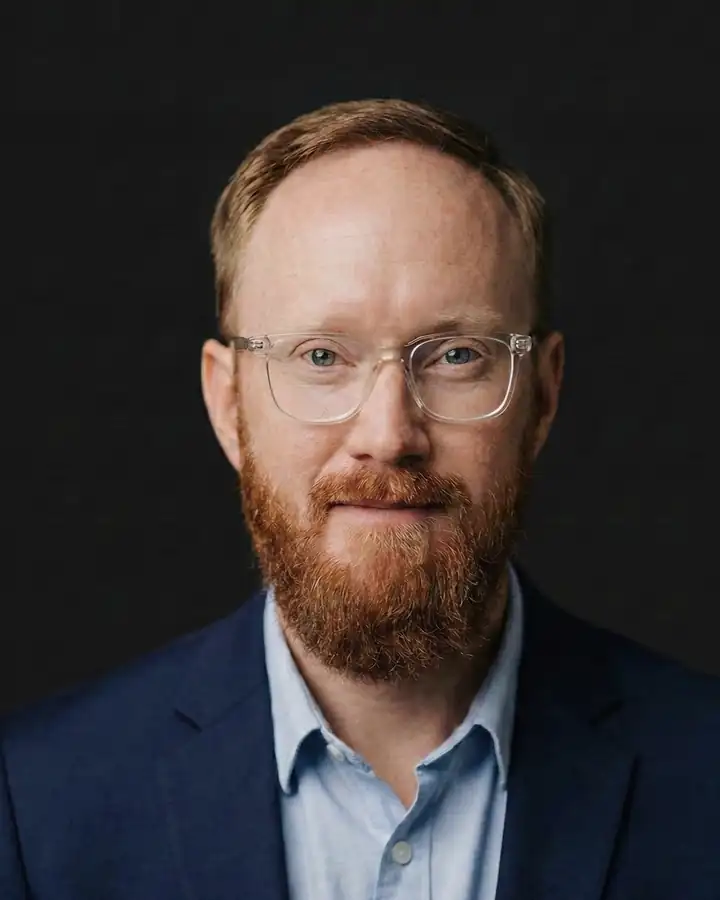 Justin Brackett · Fractional CMO · Updated October 22, 2026
A fractional CMO for churches exists because churches don’t usually have a marketing department. They have a communications team, a creative team, a worship team that posts on Instagram, a youth pastor who runs the YouTube channel, and an executive pastor who approves everything at 11pm. The pieces are there. The structure that connects them isn’t. That’s what a fractional CMO brings.
A fractional CMO for churches does the same thing a chief marketing officer does for a company, adapted to a church: owns the message, designs the communications system, leads the team and vendors, and reports to the executive pastor or lead pastor on the numbers that matter. The difference from a communications director is scope. A communications director produces. A fractional CMO owns the outcome and leads the people who produce.
In practice, a fractional CMO for churches carries 5 responsibilities:
Communications tells the people already in the building what’s happening. Marketing reaches the people who aren’t there yet and moves them toward a first visit, a next step or a gift. Most churches are good at the first and have never built the second, and they ask the communications team to do both without the structure or the authority to do either well.
A fractional CMO for churches holds both. Internal communications keeps the church aligned. External marketing grows it. The same system runs both, because the message, the channels and the scoreboard are shared. What changes is the audience and the ask.
With one system and local flexibility inside it. At Seacoast Church (2013 to 2018), I served as Digital Communications Director across 14 campuses. The problem wasn’t effort or talent. It was 14 ways of saying the same thing, 14 social accounts drifting in 14 directions, and a central team drowning in requests.
What fixed it was structure: one message every campus could adapt but not rewrite, a shared channel plan with defined roles for central and campus teams, a request and approval process with real deadlines, and a scoreboard each campus pastor could read. Alignment isn’t a meeting. It’s a system that makes the aligned thing the easy thing.
If you’re a multisite church, this is almost always the first problem a fractional CMO for churches solves, because every other result depends on it.
Because the church asked a producer to be an executive without giving them the authority, the structure or the help. The communications director is approving graphics, writing email, managing the website, fielding requests from 12 ministries and reporting to a pastor who has 40 other things to think about. Nobody owns the strategy, so the director becomes the bottleneck for everything.
A fractional CMO for churches takes the executive weight off that person. Strategy, vendor direction, prioritization and reporting move up to the fractional role. The communications director gets to do what they’re good at, inside a system that protects them from the request firehose. In my experience the director stays, gets better, and stops looking for another job.
At Lakewood Church (2018 to 2020), I was Senior Manager of Digital Connections. The digital program sent 1M emails a day at a 49% open rate, the social audience reached 44M followers, and campaign emails sent 3 times a month raised about $47,000 each on average. I also led Joel Osteen’s YouTube.
Those numbers weren’t the result of a big team working hard. They were the result of a system: one message, a fixed set of channels, automated follow-up, a weekly rhythm and a scoreboard everyone could read. The team executed inside that structure instead of inventing one every week.
Your church doesn’t need Lakewood’s scale to need Lakewood’s structure, and it doesn’t need a full-time hire to get a fractional CMO for churches. A 1,200-person church with 2 campuses has the same 5 parts. They’re just smaller.
Your team, or digifora. As your fractional CMO for churches, I design the system and oversee it. The execution (YouTube, email automation, paid media, website, creative) is done by your communications team if they have the capacity, or by digifora, the full-service marketing agency I founded in 2020, if they don’t.
digifora works with churches and ministries on exactly this: YouTube growth, sermon and content distribution, email and SMS, paid media for events and first-time guests, and the website that holds it together. When digifora runs the execution, the handoff between strategy and work disappears, because the same executive who designed the system is directing the team that runs it.
You don’t have to hire digifora to work with me. Many churches have a capable team and need the leadership layer, not more hands. But if you need both, you get one accountable relationship instead of a consultant and a vendor pointing at each other.
Most fractional CMO for churches engagements run $5,000 to $15,000 a month for 1 to 2 days a week, depending on church size and scope. That compares with $120,000 to $200,000 a year plus benefits for an experienced full-time communications executive, if you can find one. Execution costs (platforms, ad spend, digifora or other vendors) are separate, and I’ll tell you what they should be before you commit.
Most of my church clients are multisite, or single-campus with more than about 1,000 in weekly attendance, or in the middle of a transition: a new campus, a capital campaign, a rebrand, a new lead pastor. Those are the moments when scattered communications costs the most, and when a fractional CMO for churches pays for itself fastest.
Two doors into working with a fractional CMO for churches.
If what’s missing is leadership
Nobody owns the message, the campuses are drifting, the communications director is drowning. 30 minutes, and you’ll know where the system is leaking.
Book a strategy call with meIf what’s missing is capacity
The direction is clear and you need a team for YouTube, email or paid media now. I’ll still be the one setting the strategy behind the work.
Start with digifora’s church teamA part-time executive who owns the church’s communications and marketing strategy, aligns campuses and ministries around one message, leads the staff and vendors who execute it, and reports to the executive or lead pastor. Typically 1 to 2 days a week.
A communications director produces and manages day-to-day communications. A fractional CMO owns the strategy, the system and the outcome, and leads the communications director. Most churches need both; the fractional role takes the executive weight off the director.
Yes, once the church is large enough that communications has outgrown one person’s head, usually around 1,000 in weekly attendance or during a transition such as a new building, campaign or lead pastor. Below that, a strong communications director with a clear plan is often enough.
The scoreboard is built around first-time guests, return rate, next-step conversions, giving units and email reach. Most churches see the system running on its own weekly rhythm by month 4 or 5 and measurable movement on those numbers by month 6.
The church’s communications team if it has the capacity, or digifora, the full-service marketing agency Justin Brackett founded, which works with churches on YouTube, email, paid media and websites. Justin designs and oversees the system either way.
Yes. He was Senior Manager of Digital Connections at Lakewood Church from 2018 to 2020, leading a digital program that sent 1M emails a day at a 49% open rate and reached 44M social followers, and leading Joel Osteen’s YouTube. Before that he was Digital Communications Director at Seacoast Church across 14 campuses from 2013 to 2018.

Justin has a proven track record of delivering results for clients across a range of industries, including hospitality, technology, retail, and non-profit.